
Emanuel County Parole and Probation
Parole and probation can both place a person under supervision in the community, but they start with different legal acts. The Georgia State Board of Pardons and Paroles decides parole for eligible state inmates. A judge orders probation as part of a sentence. The Georgia Department of Community Supervision, commonly called DCS, handles field supervision for both groups.
A person who bonds out of Emanuel County Jail is not automatically on either form of supervision. Bond releases the person from jail while the case remains open. Probation becomes relevant if the court imposes it, including after a plea, sentence, or revocation. Parole becomes relevant after a state prison path. This distinction keeps a roster departure from being mislabeled.
| Feature | Parole | Probation |
|---|---|---|
| Source | Georgia State Board of Pardons and Paroles | Sentencing court |
| Usual custody path | Release from an eligible state prison sentence | Sentence in the community, sometimes after jail |
| Field supervision | Georgia Department of Community Supervision | Georgia Department of Community Supervision |
| Key proof | Board, GDC, and DCS records | Sentence, later court orders, and DCS records |
| End point | Parole discharge or sentence expiration | Court termination or sentence completion |
Verify Emanuel County Post-Release Supervision
Begin with the custody route. A county-jail release on bond calls for a court search. A person transferred to GDC or released from Emanuel Womens Facility calls for the statewide offender record. Someone leaving Emanuel Detention Center may return to community supervision after a state probation detention term.
- Search the GDC offender query by exact name, then variants or GDC ID.
- Compare the result with the Emanuel County booking and court case using birth date, charge, and sentence details.
- Check the Georgia State Board of Pardons and Paroles when parole action is involved.
- Use the DCS field-office resources for supervision office and public status context.
- Read the sentencing court record for probation, revocation, modification, termination, or discharge orders.
- Request a focused public record if no public page resolves the status.
Do not use one common name as proof. A GDC ID and date of birth are stronger identifiers. If the issue began with a local booking, the release path on the Emanuel County records page can help connect the jail event to the state record.
Emanuel County DCS Supervision
DCS is the practical field agency for Emanuel County supervision questions. Its directory should be used to identify the office serving the area because office boundaries and contact listings can change. The research did not support publishing a fixed Emanuel County field-office address. The current official directory is therefore more reliable than an assumed local office.
Georgia Department of Community Supervision
Role: Field supervision for probation and parole
Official source: dcs.georgia.gov
Office route: Use the current field-office directory for Emanuel County
The official DCS site shows the statewide agency context used for Emanuel County supervision.
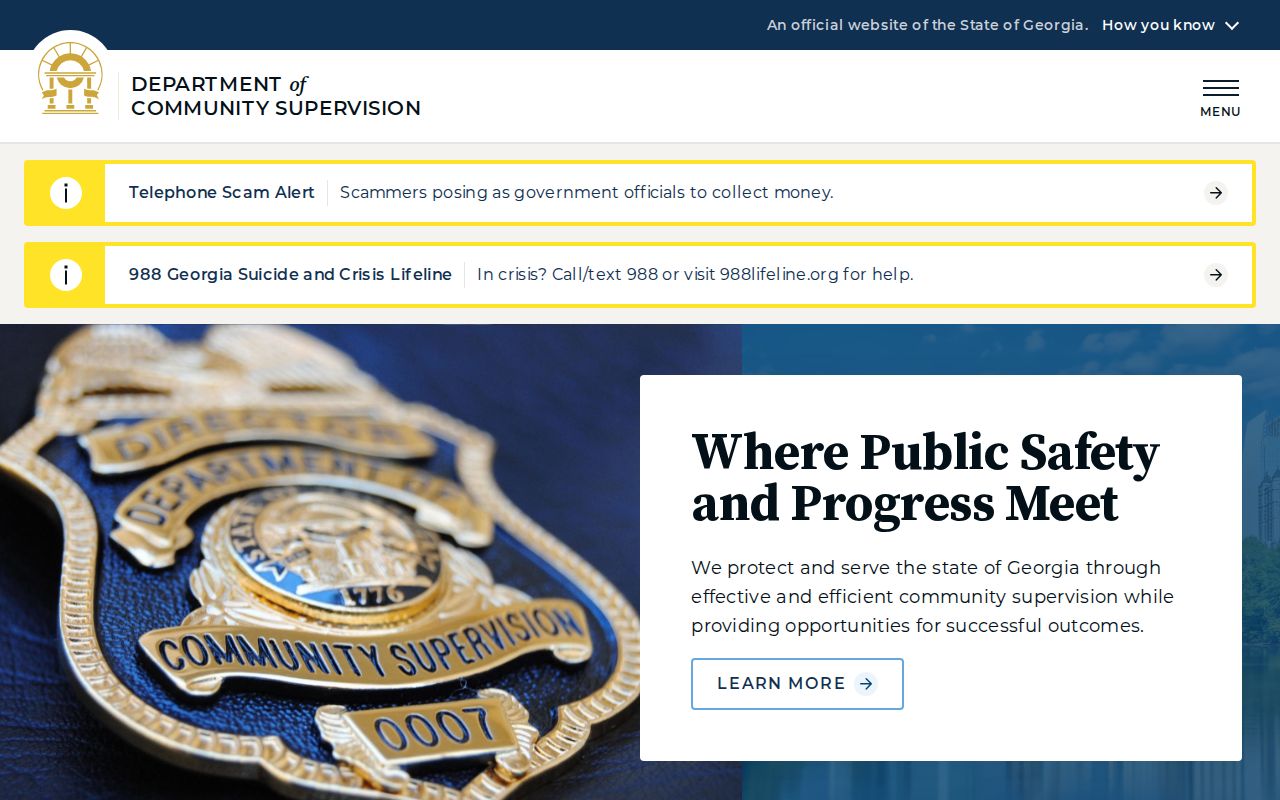
The agency page is the starting point for current office routing, while the court or parole record supplies the legal basis for supervision.
DCS may confirm public office and supervision context, but detailed notes, victim data, addresses, and investigative material may be protected. Keep a request narrow: ask whether public information identifies active supervision, the responsible office, or a public warrant status.
Emanuel Detention Center Supervision
Emanuel County has an unusual local layer because it hosts Emanuel Detention Center, a GDC probation detention center. Release from that facility is a state-corrections event. It is not an ordinary bond release from Emanuel County Jail. A person completing a detention-center term may return to community supervision, move to another state facility, or follow a court order.
That path should be checked through GDC, DCS, and the sentencing court. The facility record establishes the state placement. The court order states the sentence or revocation basis. DCS addresses ongoing field supervision. If parole is not part of the sentence, a parole search may add nothing. The Emanuel Womens Facility profile identifies a separate state-prison route within the county.
A transfer from the county jail's current roster into either state facility explains why a person disappeared from local display. It does not show that all custody or supervision ended. Match the local release or transfer field with the state record before drawing that conclusion.
Emanuel County Parole Decisions
Georgia parole is state controlled. The parole board publishes process, consideration, meeting, and decision information through its official website, but the research found no reliable Emanuel County-specific hearing calendar. Individual consideration is not a rolling county release list.
Possible board outcomes include grant, denial, deferral, reconsideration, rescission, revocation, continuation, or discharge, depending on the proceeding. A grant can lead to release into supervision. A denial or deferral means custody or later review continues. Eligibility alone does not promise release.
O.C.G.A. Title 42, Chapter 9 supplies the parole framework, and O.C.G.A. 42-9-45 is a key eligibility provision. Serious violent felony rules in O.C.G.A. 17-10-6.1 can add minimum-service limits. Read the current board explanation with the sentence because the public GDC status, board action, and DCS record may update on different schedules.
Emanuel County Absconder Status
An absconder is a person alleged to have stopped reporting or complying while still under supervision. It does not mean every released person is wanted. A warrant is a separate legal action and should be verified through the agency or court that issued it.
Use direct DCS, parole-board, court, or law-enforcement sources for any public status. Check the date. A later arrest, revocation hearing, reinstatement, or discharge can change an older entry. Never infer absconder status from a missed appointment described by an unofficial source.
When the court record shows revocation, it may order confinement, return to supervision, or a changed term. The GDC record can then reflect renewed state custody. The county jail roster only answers whether the person is displayed there now; it does not establish the full supervision outcome.
Emanuel County Supervision Terms
Conditions are rules attached to supervision. They may include reporting, court-ordered programs, payments, travel limits, or other case-specific terms. Public pages do not necessarily show every condition. The sentence, parole certificate, and supervising agency record are the correct sources.
Key terms
Discharge: formal end of a custody or supervision obligation. Revocation: an order changing or ending community supervision after an alleged violation. Detainer: a request or hold from another agency. Absconder: a supervised person alleged to have stopped reporting or complying.
A violation allegation is not the same as a final revocation. The court or parole authority must address the case through its process. If a person is taken into custody, compare the new booking with the older supervision case rather than assuming the original release record was wrong.
Emanuel County Supervision Discharge
Supervision ends through the authority that created it. Probation may end at sentence completion or through a court termination order. Parole may end by discharge or sentence expiration under the relevant state process. Physical release from jail or prison happens earlier in many cases.
For probation, request the sentencing order and any later modification, termination, or revocation order from the proper clerk. For parole, reconcile the parole board record, GDC status, and DCS supervision information. A “released” GDC status does not by itself prove that field supervision ended.
Georgia's Open Records Act can support a focused request, though protected supervision material may be withheld. Ask for the public status or discharge fact rather than broad case notes. The final court or board order is stronger proof than an old directory, alert, or roster entry.
Keep each date tied to its event. Prison release, parole start, probation start, a later violation filing, and final discharge can all occur on different days. A person may be free from physical custody yet remain responsible for reports and conditions. Conversely, an old public page may retain a parole reference after the case has changed. A current court order, board action, or DCS response resolves that conflict. If the records disagree, ask the source agency which public document reflects the present status rather than selecting the most convenient date.